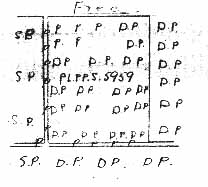
The farmer's plan for eradication
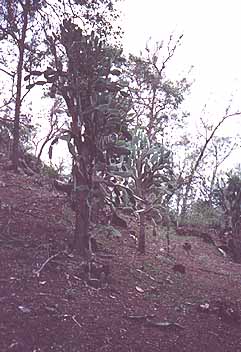
Appropriately named for its fruit, this member of the cactus family spread silently and quickly consuming good grazing land. It was declared a pest in 1890's. Special land leases were granted to farmers requiring them to clear the allotted land within two years. Some of these leases were taken up along the Ridgelands Road. The thorns were some damaging both to stock and humans. Without the use of pesticides, the task proved impossible to many and they relinquished their blocks. Some farmers tried placing cordwood scrub over the block, waiting for appropriate conditions to burn. However the weather defeated them. The government was spurred on by the devastation and loss of extensive amount of good quality scrub and grazing land and introduced both the cochineal and cactoblastus beetles to eradicate the pest. By 1930, the pest was practically eradicated but some stands can still be seen in the area.
The Jujube Tree (Chinese Date)
This originated in Northern China and perhaps found its way into the area through Chinese going to the Canoona Gold Fields. While the fruit is of reasonable quality and usefulness, it is a woody, spiny, shrubby tree. They thrive on neglect in warm dry climates such as we have here and tolerate extremes of temperature.
Churchyard Grass
Affectionately called Mongrel grass in this area, it grows tall and thick. It is thought that it was first brought to the area through the chaff bag of the local Minister. Each month as he delivered his sermon, his horse would be tied up to the chaff bag outside the church. It is here that the grass was first noticed and it is believed to be introduced through seed from South Africa.
The farmer's plan for eradication
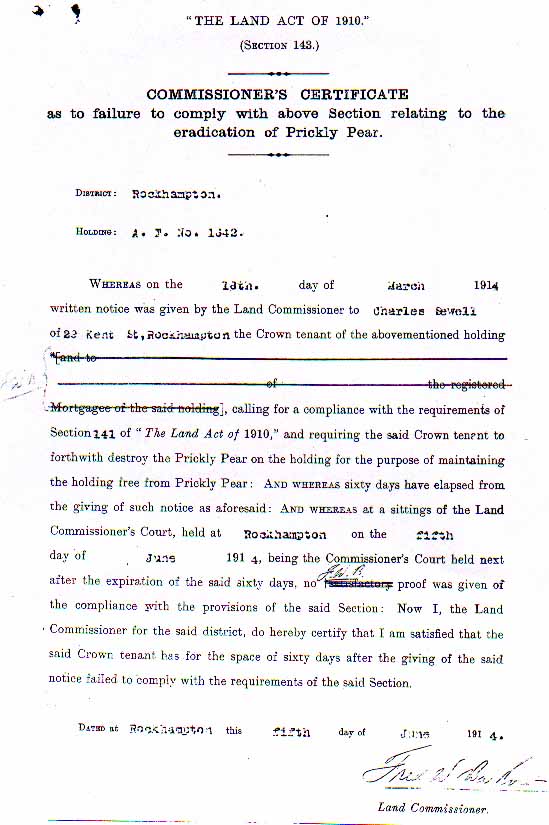
As with most Agricultural Districts, Alton Downs has suffered from both plant, animal and insect infestations. Apart from Drought (1902,1940, 1969),and Floods (1918,1954,1991) predominant pests have been Prickly pear, Rabbits, Tick, Nagora Burr.